
Tree service planned around Brandon lots
Established trees in a busy part of Hillsborough County
Brandon properties range from older lots around Limona to compact subdivisions near Providence Lakes and homes along the Bloomingdale corridor. Commercial sites and apartment communities add another set of constraints near State Road 60 and the approaches to Interstate 75. Mature shade trees are valuable on these developed sites, but they also share limited space with parking, sidewalks, roofs, signs, and utilities. Tree work needs a clear purpose and a controlled work zone.
Before choosing equipment, we look for the route that keeps people and property separated from the work. A front-yard tree may allow direct lift access. A tree behind a fence may require climbing and rigging through a narrow gate. On a commercial site, vehicle and pedestrian movement can matter as much as the canopy. Staging, cones, landing zones, and cleanup sequence should be decided before the first branch is cut.
A clear route from backyard to truck
For a Brandon tree behind a fence, the removal route can matter as much as the tree’s height. Planning how wood leaves the yard helps you compare the whole job, including the surfaces, fences, and planting beds that need to stay intact.
- The narrowest opening
Include the gate width and anything immediately behind it, such as an air-conditioning unit, shed, or sharp turn.
- People using the site
At apartments or businesses near the SR 60 corridor, explain how residents, customers, and deliveries reach the work area.
- The finished space
If a stump will block a new fence or patio, include that next project in the request so stump work can be scoped separately.
| Mapped ZIP | Tree cover |
|---|---|
| 33510 | About 25% |
The mapped 33510 ZIP area only. This is a partial view of the Brandon area; 33511 is not in the supplied map.
The mapped area includes yards, roads, buildings, and water. Retaining a useful shade tree and removing a tree in conflict are separate decisions, even on the same lot.
Area-wide estimates from 30-meter satellite data, including water in the mapped area. They do not assess an individual tree, property, or removal need.
Source: USDA Forest Service / NLCD · 2025 data, release v2025.6.
How we measured these areas
TEAM calculated these estimates using the same ZIP-area polygons shown on our service-area map. Each 30-meter pixel is weighted by the portion inside the polygon. Water and valid zero-canopy pixels stay in the mapped area; missing data are excluded. Every area shown has at least 99% data coverage.
The supplied map uses simplified ZIP-area shapes, not property or city boundaries. Five small boundary self-intersections were resolved for calculation; the map file was preserved. Results are rounded to whole percentages and cannot determine tree condition, species, permit requirements, or job cost. Verified .
Download the measurements and source record · View the map boundaries
Keep useful canopy while correcting hazards
Pruning works best when it addresses a named problem. That may be deadwood over a parking space, a long limb carrying too much weight, a branch rubbing the roof, or crowded leaders on a younger tree. Tree pruning in Brandon uses selective cuts at sound branch unions. The goal is a safer, better-structured tree, not a thin shell of foliage left at the ends of bare limbs.
A healthy mature tree rarely benefits from a dramatic makeover. Removing too much live canopy at once reduces the tree’s ability to produce energy and can trigger weak regrowth. Clearance can often be gained with several well-placed cuts instead of stripping an entire side. If the tree has cracks, cavities, root disturbance, or widespread decline, the condition should be evaluated before routine trimming is treated as the answer.
Removal requires control from canopy to curb
When a tree is dead, structurally compromised, badly storm damaged, or in an unavoidable conflict with approved work, removal may be the reasonable choice. Tree removal for a Brandon property is planned around the structures below it. Limbs can be lowered with ropes, trunk pieces cut to manageable size, and heavy material kept out of the areas that need protection.
The job is not finished when the trunk reaches the ground. Brush, wood, sawdust, and small debris need an exit plan that does not block the drive or scatter material through neighboring yards. Ask whether stump grinding is included, optional, or unnecessary for your next use of the area. A lawn, replacement planting, fence, and construction pad each call for a different finish at ground level.
Permit questions begin with jurisdiction
Hillsborough County maintains a tree-removal permit process for unincorporated properties. Tampa and Temple Terrace are separate incorporated jurisdictions, and a mailing address alone should not be used to guess which rules apply. For a Brandon project, confirm the parcel authority, current requirements, and whether the proposed work is routine maintenance, removal, or part of a larger development plan before scheduling regulated work.
Tree species, size, condition, and project context can matter. If the owner is preparing for construction, drainage changes, or a site redesign, bring those plans into the initial conversation. That makes it easier to identify whether the tree work can stand alone or must coordinate with another permit. It also protects the trees intended to remain from avoidable root damage once other equipment arrives.
Handle storm material in the right order
A tree or limb on a structure is different from a brush pile already resting at the curb. The first situation may involve unstable wood, hidden load, utilities, and damage documentation. Keep clear and call for emergency tree help in Brandon when the scene presents an immediate hazard. Do not walk beneath hanging limbs or try to pull a loaded branch free with a vehicle.
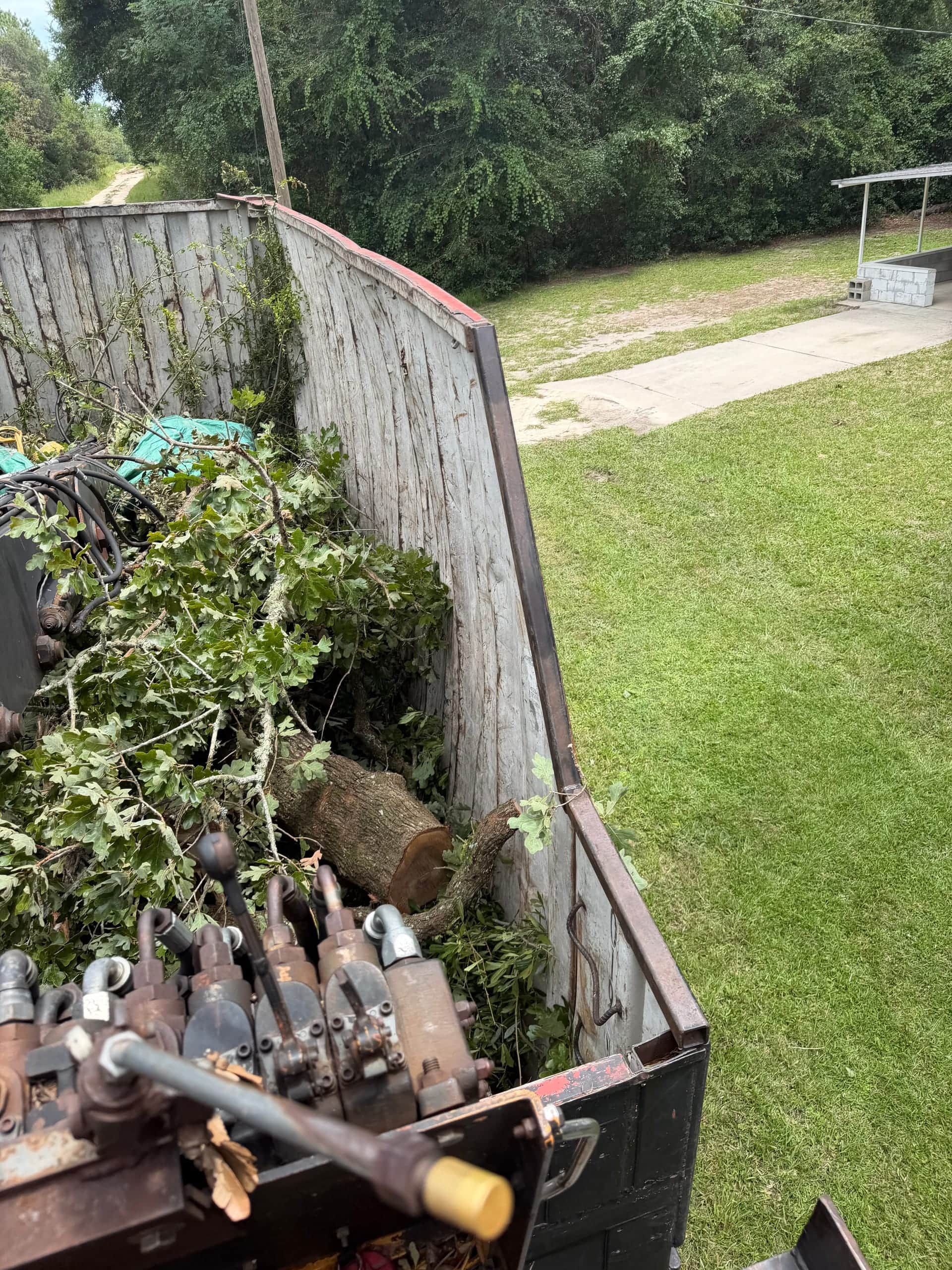
Once material is safely on the ground, cleanup becomes a hauling problem. Brandon tree debris hauling can address clean branches, logs, and brush from a storm or separate trimming project. Describe whether the pile contains only vegetation and whether a truck can approach it. Mixed waste, fencing, soil, or construction material changes the scope and should be disclosed before pickup.
A better quote starts with better site details
Include the Brandon address, the tree’s location and approximate size, and what prompted the request. Note locked gates, narrow side yards, soft ground, pools, overhead lines, tenant access, parking limits, or restricted business hours.
If you are unsure which service fits, choose “Not Sure.” We will use the site visit to decide whether the job calls for pruning, assessment, removal, stump work, or hauling.