
Tree Pruning & Trimming
in Tampa Bay
We remove deadwood, reduce weight on weak limbs, and create needed clearance without stripping the canopy.
What the Service Covers
Our certified arborists start with the problem: deadwood, weak structure, blocked sight lines, or storm-damaged limbs. They make selective cuts while retaining the live canopy the tree needs.
What We Handle
- Crown thinning — reduces wind resistance and improves light
- Crown raising — clears space below the canopy
- Deadwood removal — eliminates dangerous falling branches
- Hazard pruning — addresses structurally weak limbs
- Vista pruning — improves views from your home
Our Process
Most trees benefit from pruning during late winter or early spring before new growth begins. Hazardous limbs should be addressed immediately regardless of season. If decline, disease, or structural weakness is hard to diagnose, have an arborist assess the tree's health before deciding what to cut.
Pruning That Prepares Trees for Hurricane Season
Pruning can reduce preventable storm hazards. Before hurricane season, we look for deadwood, weak unions, and overloaded limbs while keeping enough live canopy for the tree to recover. No pruning can make a tree hurricane-proof.
A warning about "hurricane cuts": some crews strip out the interior branches and leave tufts at the limb tips (lion-tailing), or chop the top off entirely. Both make trees more dangerous, not less — the regrowth is weakly attached and the remaining limbs catch more wind, not less. We prune to ANSI A300 standards, and if another quote proposes topping your tree, that is a red flag.
The best window for structural pruning is before storm season starts. If a limb is already cracked or hanging, that is not a scheduling question — call us now.
When — and How Much — to Prune in Florida
For most Tampa Bay shade trees, late winter through early spring is ideal — the tree is about to push new growth that closes pruning cuts quickly. Hazardous limbs are the exception; those come off whenever they are found, in any season. Palms are different; palm trimming, which follows different rules, focuses on frond health instead of broadleaf canopy structure.
How much matters as much as when. We never remove more than about a quarter of a tree's live canopy in one season — beyond that, trees stress, sprout weak regrowth, and become more storm-prone. Young trees benefit most of all: structural pruning in the first decade sets the branch architecture the tree keeps for the rest of its life. When safe structure cannot be restored through staged pruning, tree removal may be the responsible option.
Before & After
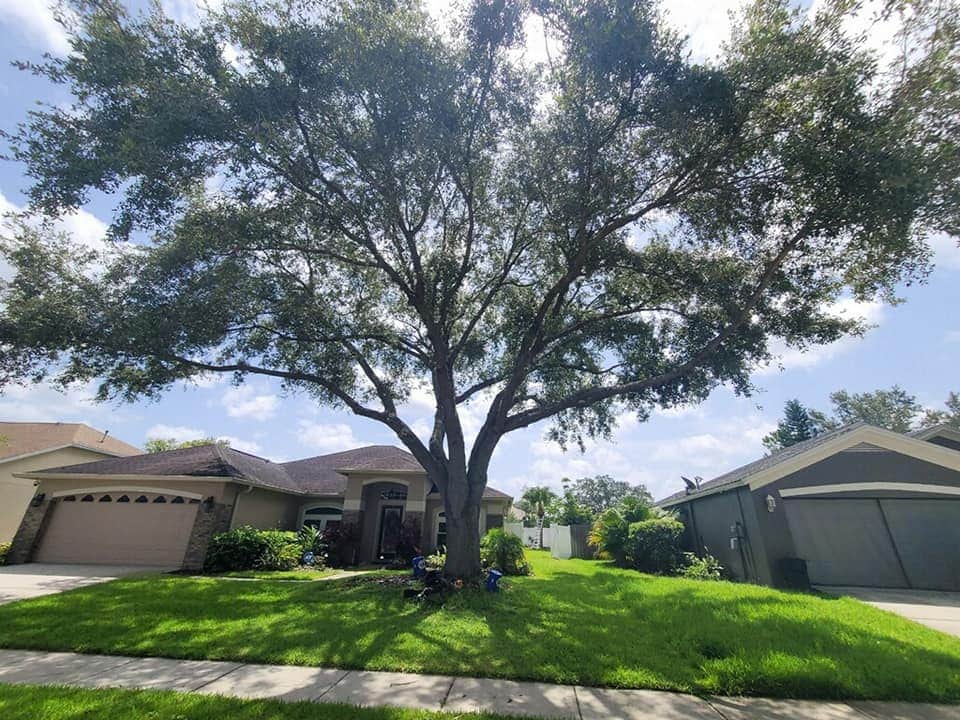
Before
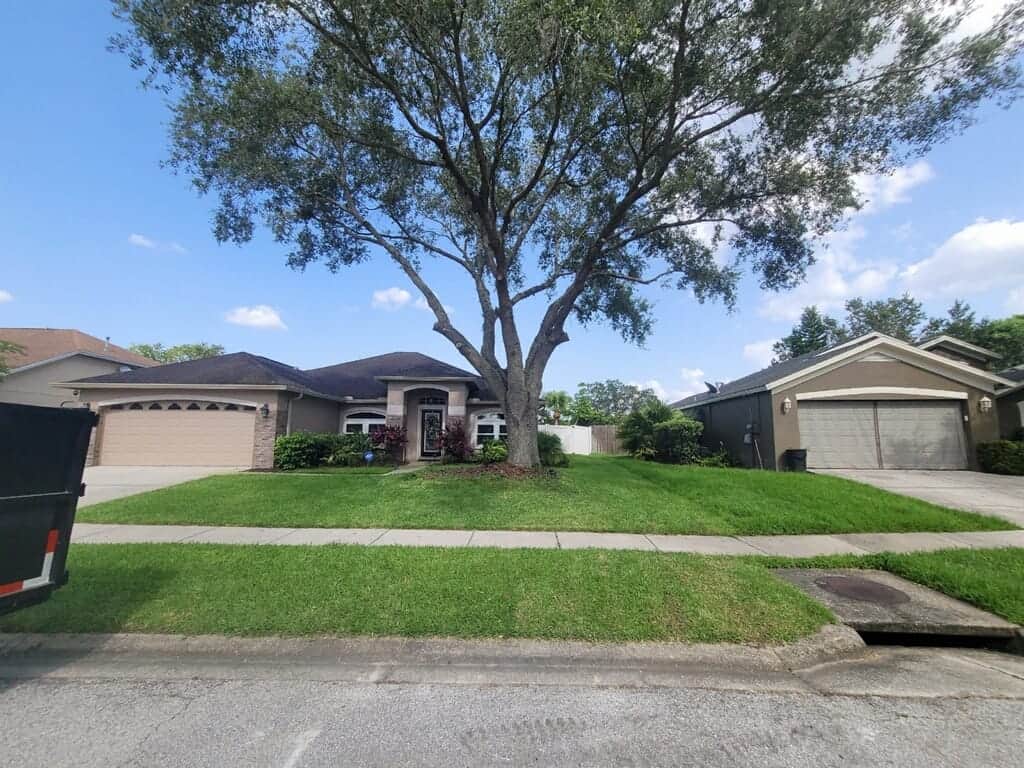
After
“These guys are awesome! They trimmed trees on a golf course behind my house, and they were safe, professional, and very thorough. They even went out of their way to trim an unsafe tree nearby, which was above and beyond what they were hired to do.”
Why Choose T.E.A.M.?
- Licensed & fully insured in Florida
- 5.0 stars across 167+ Google reviews
- 15+ years serving Tampa Bay
- Certified arborists on staff
- Full cleanup & debris removal included
- Free, no-obligation estimates
Request a Quote for Tree Pruning
Tell us about the property and the work you need. The service is already selected for you.
Request a Free Quote
Tell us what the job involves. We'll respond within one hour during business hours.
Tree Pruning Questions
No. Topping removes the canopy that feeds the tree and triggers fast, weakly attached regrowth that breaks more easily in storms. Proper crown thinning and reduction cuts achieve the safety goal without ruining the tree. We do not top trees, and we recommend declining any quote that proposes it.
A mature oak in good shape typically needs structural pruning every 3 to 5 years, with a deadwood check after any major storm. Fast growers and trees near the house may warrant more frequent visits — an assessment will give you a schedule for your specific trees.
In Florida you are generally allowed to trim overhanging branches back to the property line, as long as the cuts do not destroy the tree. We recommend a conversation with your neighbor first, and we make the cuts correctly so the tree stays healthy and the goodwill stays intact.
Late winter to early spring for routine structural pruning, and before June for storm preparation. Dead, cracked, or hanging limbs should be removed immediately regardless of season.
Industry standards cap healthy pruning at roughly 25% of the live canopy per season. If a tree needs more than that, it is usually a sign the right plan is staged pruning over two or more seasons — or an honest conversation about removal.
Have a Tree Job to Plan?
Call or Request a Quote.
Tell us what you see. We'll help you choose the right next step.